Two Ford GT40s are bearing down on the finish line at Le Mans. It is June 1966, and after almost 24 hours the company has the victory it spent years chasing. But there is a problem hidden inside the perfect photograph Ford wants: if the leading cars cross together, which crew has actually won? One of the drivers has helped turn the unreliable GT40 into a contender. The answer awaiting him at the line will be hard to accept.
A third Ford would finish behind them, completing a 1966 Le Mans podium sweep that seemed out of reach when every GT40 retired in both 1964 and 1965. To understand why the triumph still carries a sting, we have to go back to a deal that never happened, then follow the engineers and drivers who refused to let two years of failure have the last word.
Why did Ford want to beat Ferrari?
By the early 1960s, Ferrari had made Le Mans its territory. The Italian marque won the race six times in a row from 1960 through 1965. Ford wanted a place in European sports-car racing, and in 1963 the company explored buying Ferrari. Negotiations advanced, but Enzo Ferrari ultimately refused the deal. Accounts differ in how much weight they give to the proposed control of Ferrari’s racing operation and to the personal affront felt in Dearborn. The outcome is clear: Ford did not buy Ferrari, and Henry Ford II committed the company to challenging it on the track.
The revenge story makes a good opening scene, but it can obscure what the GT40 really required. Ford had to create a car that was fast for a lap and durable for a full day. That meant building a racing organization as much as building a machine.
For Ferrari, racing was central to the company’s identity. For Ford, Le Mans promised something a showroom could not: proof, in public, against the most successful name at the event. A takeover might have bought an established racing operation. After the talks collapsed, Ford had to build a rival from the ground up. Money could accelerate the work, but it could not buy experience of every corner, pit stop, and hour after dark on the Circuit de la Sarthe.
The GT40 was born on both sides of the Atlantic
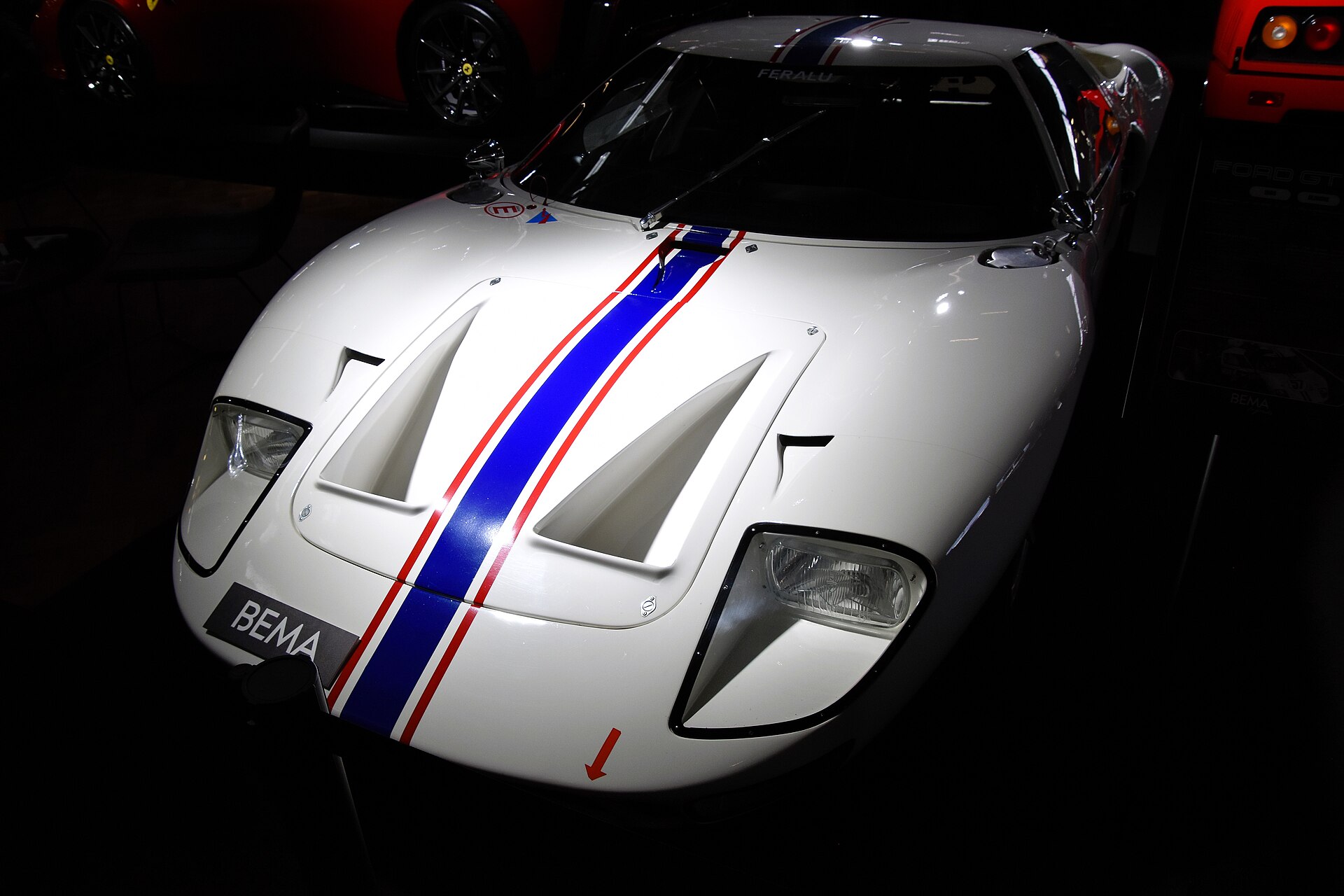
The project drew on the experience of British race-car designer Eric Broadley and his Lola Mk6, with John Wyer leading the early Ford Advanced Vehicles effort in England. Ford engineers and suppliers in the United States contributed engines, development capacity, and manufacturing resources. The name GT40 referred to the car’s roughly 40-inch height. It was an international program from the beginning, not a single person’s invention.
At Le Mans in 1964, three GT40s started and none finished. There was speed, but mechanical reliability was missing. In 1965 the cars returned with important changes. Ford and Shelby American had made the GT40 quicker, and a seven-liter, 427-cubic-inch V8 was being developed for the larger-engined version. The result at Le Mans was still painful: the Ford entries again retired while Ferrari won.
Ken Miles’s testing and feedback, Phil Remington’s engineering work, and the combined efforts of Shelby American, Ford Engineering, and Holman & Moody helped turn those failures into a stronger GT40 Mk II. The big engine was only part of the answer. Brakes, aerodynamics, cooling, fuel supply, and gearbox durability all mattered when the race lasted from one afternoon to the next.
Why was the Ford GT40 so difficult to make reliable?
Because Le Mans exposed weaknesses that a short sprint could hide. The GT40 could be quick, yet heat, braking loads, fuel delivery, and repeated gear changes had to remain manageable for an entire day. In 1965, Miles and the development team changed suspension settings and tested aerodynamic ideas; Remington reworked air ducting around the larger engine. The seven-liter V8 gave the Mk II tremendous potential, but the gearbox and engine still had to survive the distance. A fast lap was evidence of promise, not a guarantee of a finish.
That distinction gave the first two Le Mans campaigns their drama. In 1964, the new car showed pace before all three entries retired. In 1965, the enlarged program still watched its cars disappear from contention one by one. From the pit wall, each failure meant another answer to find before the next June. It was an expensive, public lesson in endurance racing: speed gets a car noticed; reliability gives it a chance to win.
Ford’s answer reached far beyond adding horsepower. Miles helped turn the Le Mans circuit into a repeatable engine test, so a motor could face race-like demands on a dynamometer long before arriving in France. The heavier Mk II also punished its brakes. Engineers improved the materials, while the teams worked out ways to replace brake components quickly in the pits. Each solution addressed a different way the dream could end before the checkered flag.
What happened at Le Mans in 1966?
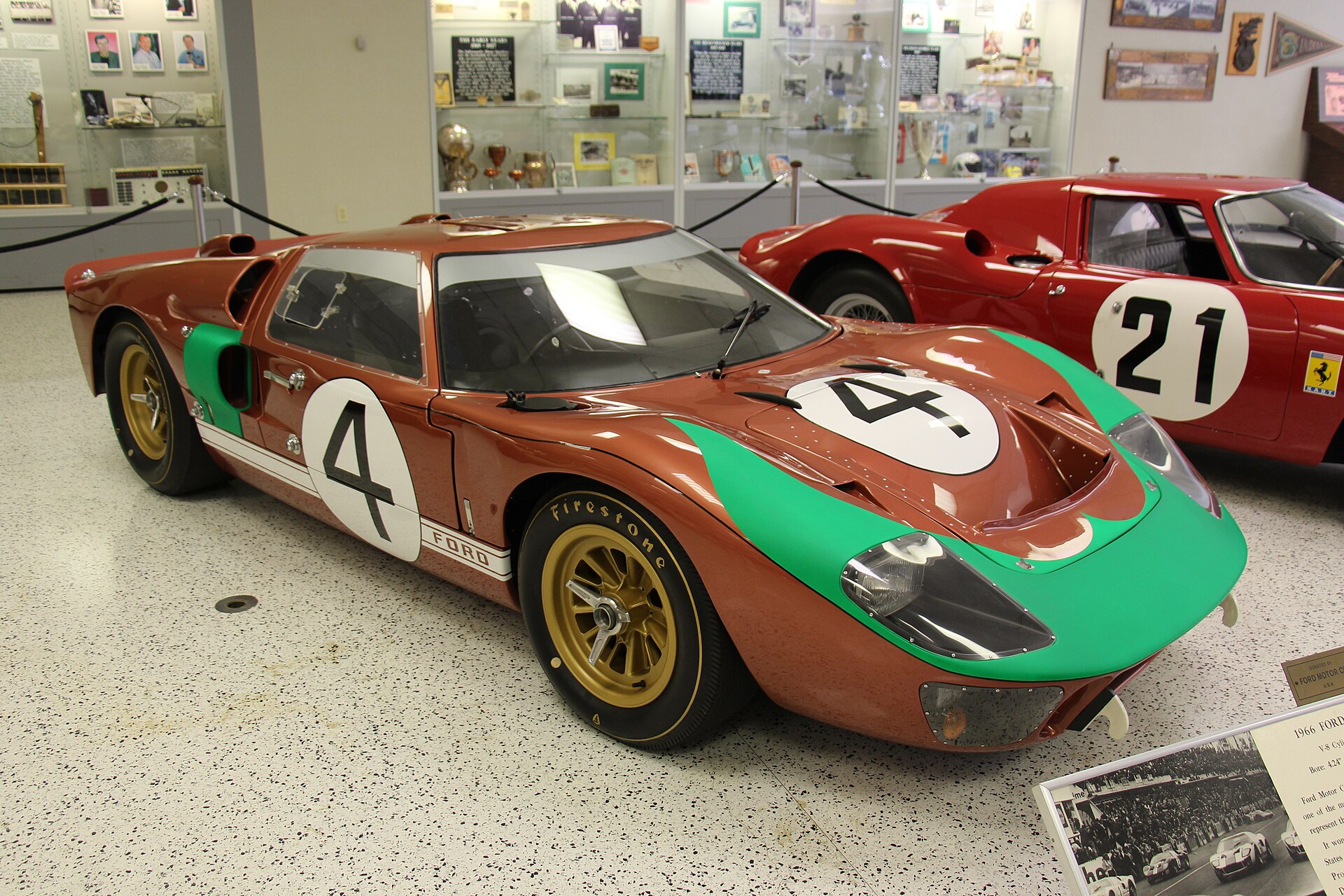
Ford arrived in 1966 better prepared. The Mk II had already won the 24 Hours of Daytona and the 12 Hours of Sebring that year. At Le Mans, Ford entered eight seven-liter Mk IIs alongside smaller-engined GT40s. Ferrari brought its own formidable prototypes. Henry Ford II started the race on 18 June, and the rivalry that had grown from the failed negotiations now played out in front of the crowd.
Daytona and Sebring were encouraging, but Le Mans had already embarrassed Ford twice. Even the opening moments offered a warning. Miles’s door would not close properly after it struck his helmet at the running start, forcing an early stop. Another Ford crew faced a different threat: Chris Amon later recalled that the tread on their intermediate tyres began to come away on the Mulsanne Straight. A change to Goodyears kept them in the race. The road was damp, and there was still a long night ahead.
As daylight faded, the 24-hour race became less like a duel between two badges and more like a test of dozens of decisions. Drivers had to protect the cars without losing touch with the leaders. Mechanics had to diagnose trouble quickly enough to send them back out. Ferrari’s works prototypes would not survive the night; Ford lost several cars as well. The three Mk IIs that remained at the front were there because the program had learned from its earlier retirements—and because these particular crews kept their cars moving.
By the final hours, Ford’s old question—could it defeat Ferrari at Le Mans?—had been answered. A more uncomfortable one replaced it. Miles and Denny Hulme were in one leading car; Bruce McLaren and Amon were in the other. Both crews had endured the rain, mechanical uncertainty, and a full night of racing. Now a plan for a shared finish threatened to decide the order in a way neither crew had settled on the track.
Why did Ken Miles finish second?
Ford wanted its leading cars to cross the line together for a memorable finish. Ken Miles and Denny Hulme, in car No. 1, had been running at the front. Bruce McLaren and Chris Amon drove car No. 2. The planned near-tie could not produce two winners: because McLaren and Amon had started farther back on the grid, race officials judged that their car had covered the greater distance over the 24 hours. They were awarded first place; Miles and Hulme took second. Ronnie Bucknum and Dick Hutcherson completed Ford’s sweep in third.
This was more than a technicality in a results table. Miles had spent countless hours making the GT40 faster and more dependable, and he had already won Daytona and Sebring in 1966. A Le Mans victory would have completed an exceptional season. Instead, the team instruction that created Ford’s publicity image changed the result at the top. The official winner was McLaren and Amon’s No. 2 car. Miles and Hulme stood one step lower, even as Ford celebrated its most important sports-car win.
That decision is why the photograph of the finish invites a second look. The corporate triumph was complete, but for Miles, who had contributed so much to the car’s development, the result was bittersweet. He died in a testing accident later that summer. The 1966 race deserves to be remembered for both the engineering achievement and the people inside the cars.
Did Ford win Le Mans four years in a row?
Yes, a Ford GT40-family car won overall in 1966, 1967, 1968, and 1969—but the four victories did not come from an unchanged car or the same works team. McLaren and Amon won in a Mk II in 1966. Dan Gurney and A.J. Foyt won in the redesigned Mk IV in 1967. After rule changes and Ford’s withdrawal from a full factory effort, John Wyer’s team won with the smaller-engined Mk I in 1968 and 1969.
| Year | Winning Ford | Winning drivers |
|---|---|---|
| 1966 | GT40 Mk II | Bruce McLaren / Chris Amon |
| 1967 | Mk IV | Dan Gurney / A. J. Foyt |
| 1968 | GT40 Mk I | Pedro Rodríguez / Lucien Bianchi |
| 1969 | GT40 Mk I | Jacky Ickx / Jackie Oliver |
The distinction matters because the popular shorthand “Ford beat Ferrari four times” can make the later years sound like repeats of 1966. In 1967 Ferrari returned with a serious challenge; in 1968 and 1969 the winning GT40s were run by a British team in a changed technical landscape. The rivalry had started the project, but the GT40’s life continued beyond that single duel.
How did Ford keep winning after 1966?
The following year, Ferrari came back to challenge Ford’s new Mk IV. Dan Gurney and A.J. Foyt brought the American-built car home first in 1967, covering more than 5,000 kilometers for the first time in Le Mans history. It was a different answer to the same question: could Ford build a car that remained quick and intact for an entire day against Ferrari? This time the victory belonged to another design and another driver pairing.
There was a twist in the cast, too: Chris Amon, who had won for Ford in 1966, drove for Ferrari in 1967. The rivalry was never quite as simple as two fixed teams facing each other across the pits. Drivers moved, designs changed, and every June brought a different combination of speed, weather, and luck. The famous Ford–Ferrari story is most interesting when those shifts stay in view.
For 1968, changed regulations reshaped the field. John Wyer’s British-run GT40 Mk I, with Pedro Rodríguez and Lucien Bianchi driving, won a race held in September rather than its usual June slot. The next year the same chassis returned with Jacky Ickx and Jackie Oliver. By then Porsche, not Ferrari, posed the decisive threat. The last hours of 1969 became another Le Mans cliffhanger: Ickx took the lead from a Porsche 908 on the final lap and won by only 120 meters.
The 1969 race also closed an era. At the start, Ickx walked to his car while the other drivers ran across the track, drawing attention to the danger of the traditional Le Mans start. The following year, drivers no longer had to make that dash. So the GT40’s fourth consecutive victory was more than a final line in Ford’s winning streak: it arrived as the race itself was beginning to change.
What made the GT40 a legend?
The GT40 was never simply an angry executive’s answer to a rejected purchase. It had to survive two unsuccessful Le Mans campaigns and improve in public. Its breakthrough came from a team large enough to span countries and disciplines, yet dependent on the precise observations of individual drivers and mechanics. The 1966 finish added a human complication that no perfect victory photograph could erase.
Perhaps that is why the question still works decades later: Ford GT40 or Ferrari? The answer depends on whether you are drawn to Ferrari’s long run of dominance, the Ford’s unlikely development journey, or the people who pushed both marques through a remarkable era of Le Mans. There is room to admire both sides and still feel the force of that June afternoon in 1966.
Interested in the journey of a classic car from the United States to Europe? Read our vehicle shipping guide for the practical planning steps.