
Every August, Monterey Car Week becomes the collector car world's main stage. The headline lots always take the front pages, and 2026 was no exception. But looking past the top of the results sheet tells a more useful story.
Several new records were set in 2026: rare Ferraris, McLarens and historic race cars all moved into new price territory. At the same time, several hundred cars further down the same catalogues sold for well under their pre-sale estimate.
In other words, Monterey showed both sides of the collector car market at once: how strong the very top of the market has become, and how much room is still left for a genuinely good buy if you know where to look.
A record-breaking week in Monterey
Combined sales across the 2026 Monterey Car Week auctions reached $755.6 million, up sharply from $432.8 million in 2025.
Of the 1,124 lots offered, 853 found a buyer, a 76% sell-through rate, at an average of $886,000 per car.
| Auction house | Total sales |
|---|---|
| RM Sotheby's | $380 million |
| Gooding Christie's | $158.8 million |
| Mecum | $111.4 million |
| Broad Arrow | $97.4 million |
| Bonhams | $11.9 million |
Different sources round these figures slightly differently depending on timing, so treat the numbers above as close approximations rather than a single, perfectly reconciled total. Hagerty's own market coverage is a useful reference point for how the week compares with previous years.
RM Sotheby's: official Monterey 2026 results press releaseHagerty: 2026 Monterey Car Week auction coverageA Shelby record just short of $43 million
The week's biggest single result came from a 1964 Shelby Cobra Daytona Coupe, chassis CSX2300, the car Carroll Shelby kept for himself. It sold at Gooding Christie's for $42,905,000, a new record for an American car sold at auction.
Gooding Christie's: 1964 Shelby Cobra Daytona Coupe, lot page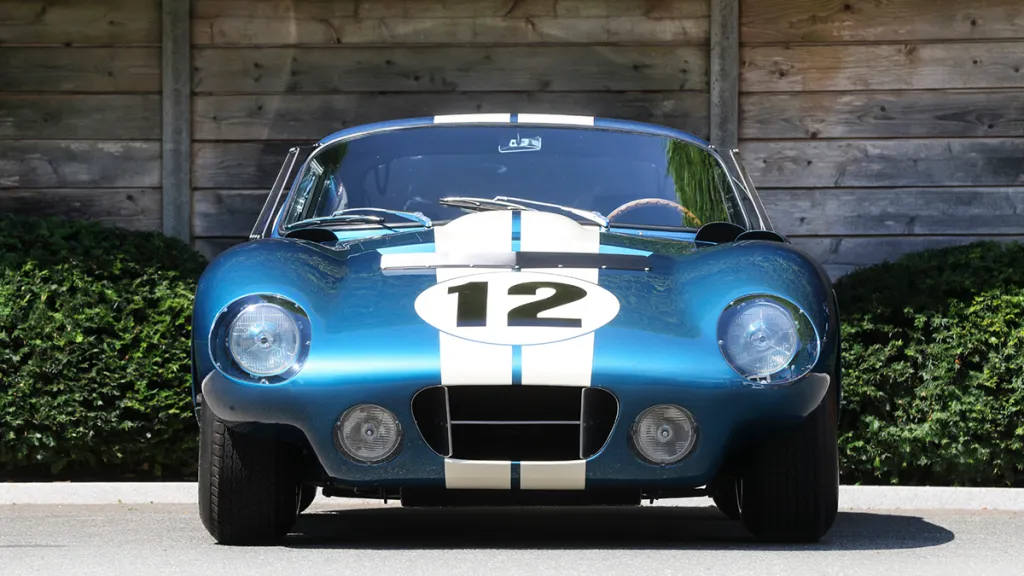
A $40 million Ferrari also crossed the block, but it wasn't a typical sale
The week's second-highest price belonged to a 2026 Ferrari Luce "Tailor Made", which sold for $40,000,000 at RM Sotheby's and became the most valuable new car ever sold at auction.
That result sits outside the regular collector-car rankings, though. The car was chassis zero of Ferrari's new electric model, offered as a charity lot with proceeds going to the Ferrari Foundation. RM Sotheby's itself treats it as a separate result from its competitive-bidding market results, and names the McLaren F1 GTR as the auction's leading traditional result.
RM Sotheby's: 2026 Ferrari Luce "Tailor Made", lot page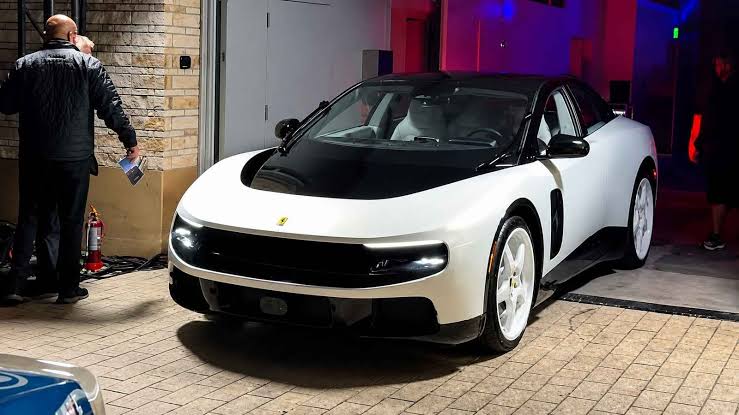
A McLaren and a Corvette lead the traditional market
The 1996 McLaren F1 GTR, one of only nine built to the updated 1996 Le Mans specification and long owned by Pink Floyd's Nick Mason, sold for $34,655,000, the highest traditional, non-charity result of the week after the Shelby, and a new record for both the McLaren F1 and for any British car sold at auction.
RM Sotheby's: 1996 McLaren F1 GTR, lot page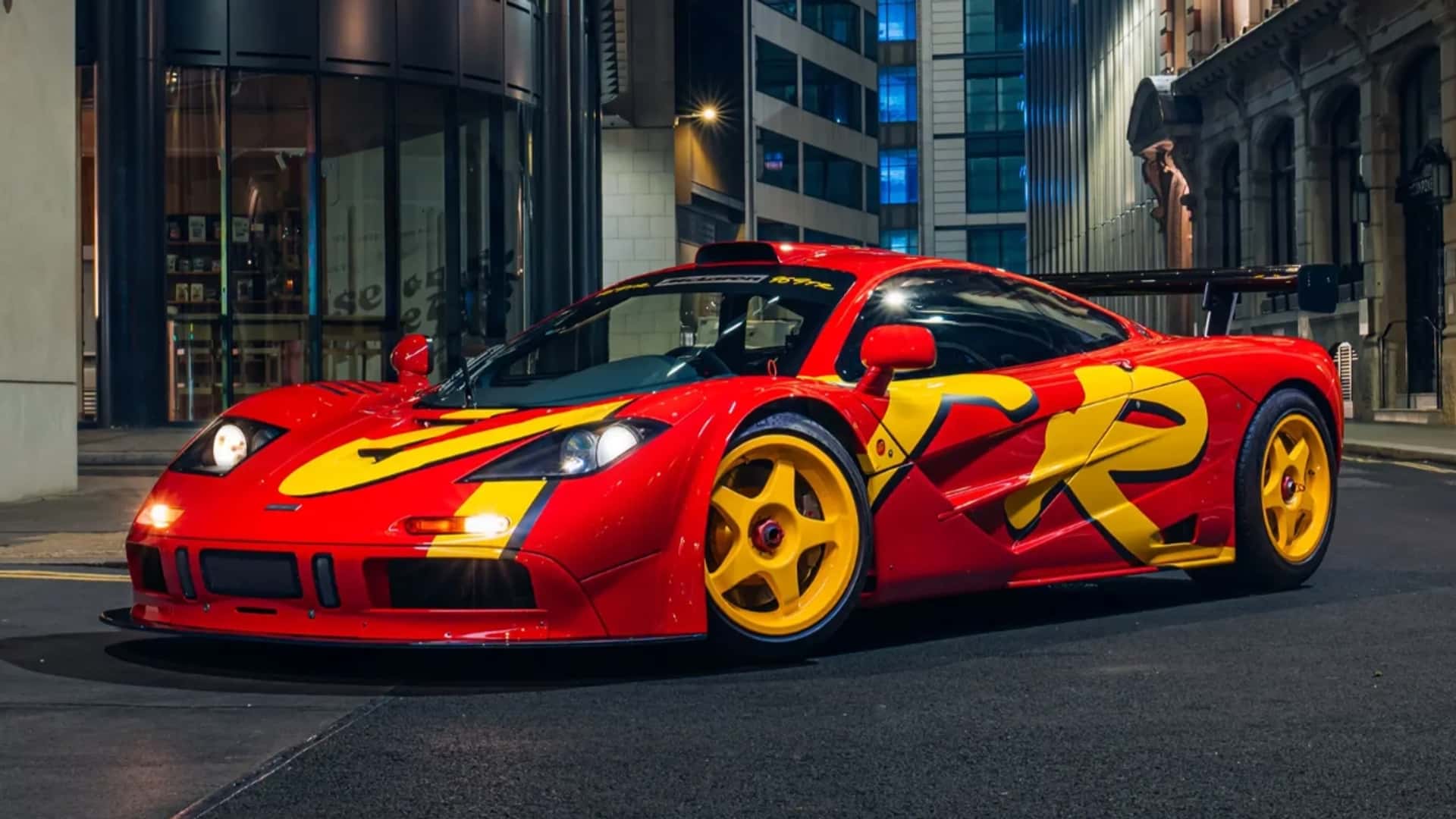
A 1963 Chevrolet Corvette Grand Sport, one of only five built, then went for $18,705,000, more than doubling the previous Corvette auction record and becoming the most expensive Corvette ever sold.
RM Sotheby's: 1963 Chevrolet Corvette Grand Sport, lot page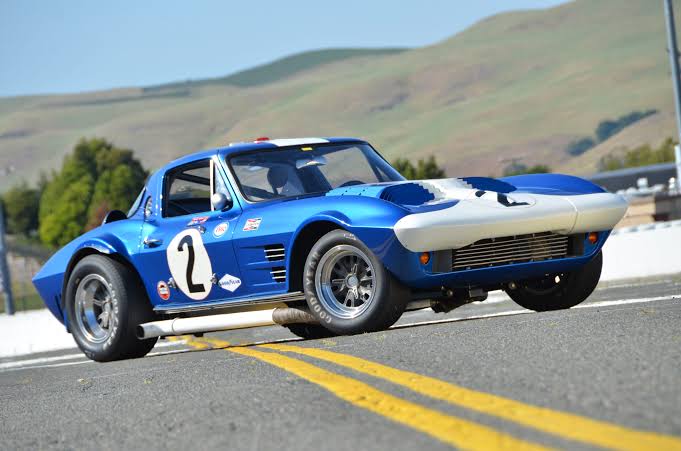
Ferrari, still in a category of its own
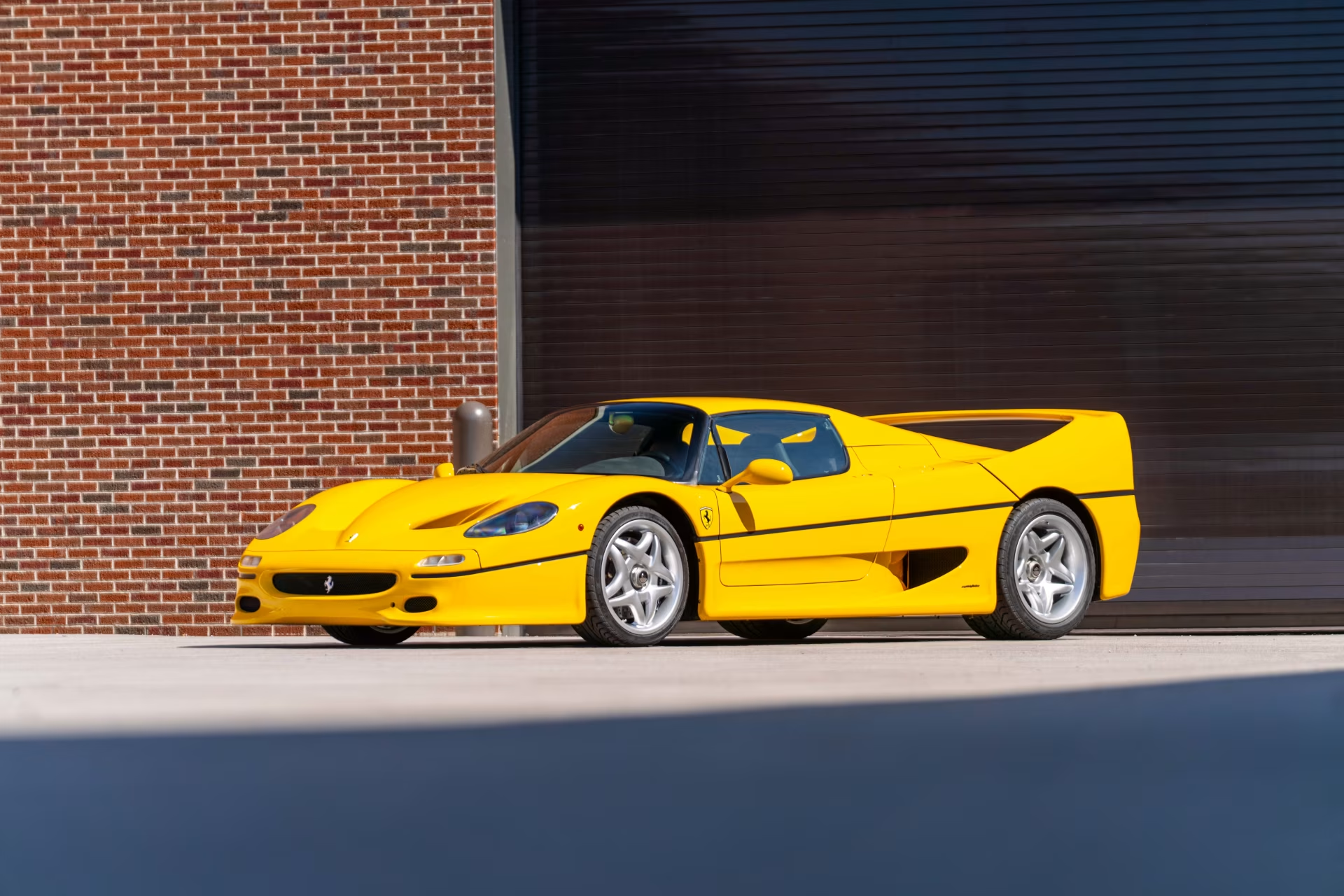
Ferrari results made up a striking share of the week's top prices. A 1996 Ferrari F50 sold for $14,575,000, and the 288 GTO, F40 and F50 each set new highs for their respective models.
The Enzo was a particular standout: three examples crossed the block during the week, at $9.41 million, $10.675 million and $12.1 million respectively. A few months earlier, a five-million-dollar Enzo would already have been considered a strong result. The very top of the market is increasingly writing its own rules.
Is the collector market shifting toward newer cars?
One of the more interesting takeaways from Monterey was not simply that prices went up. It also mattered which era of car was being discussed.
Compared with Hagerty Price Guide values, cars from the 1980s onward sold 31 to 38 percent above guide across several categories. Cars from the 1950s and 1960s did the opposite: their median result landed roughly 6.2 percent below guide.
That gap is worth noting. For a long time, the assumption in the classic car world was simple: the older and rarer a car, the more securely it sits at the top of the market. Right now, though, extremely strong demand is showing up for models the current generation of collectors grew up dreaming about: the Ferrari F40, F50, McLaren F1 and Porsche 959. The dream cars of the 1980s and 1990s have become serious collector classics in their own right.
A different market hides behind the headline results
It's tempting to look at the record prices above and assume Monterey Car Week is purely a multi-million-dollar game. Look at the results a little more closely, though, and a considerably more complex picture emerges.
Comparing the publicly available results of four of the week's auction houses (Gooding Christie's, Broad Arrow, Bonhams and Mecum), 467 lots could be checked against both their sale price and their pre-sale estimate. Of those, 241 lots, or 52%, sold below the low estimate: 229 cars and 12 motorcycles or racing-related lots.
RM Sotheby's results are not part of this comparison. Once a car sells, RM Sotheby's removes the pre-sale estimate from the public lot page, so its roughly 185 sold Monterey lots could not be checked the same way. That's a data-availability limitation, not a reflection of how those cars actually performed.
| Auction house | Lots checked | Below low estimate | Share |
|---|---|---|---|
| Gooding Christie's (Pebble Beach) | 135 | 65 | 48% |
| Broad Arrow (The Quail) | 138 | 58 | 42% |
| Bonhams (Laguna Seca) | 35 | 25 | 71% |
| Mecum (Monterey) | 159 | 93 | 58% |
| Total | 467 | 241 | 52% |
The numbers behind that 52% are worth a closer look too. Combined, the 241 below-estimate lots sold for $61.7 million against combined low estimates of $75.8 million, a $14.1 million gap. The median result finished 19% below the low estimate; 97 lots finished 25% or more below, and 43 finished 40% or more below.
A large part of the field was also genuinely accessible. 310 lots across the whole week sold for $100,000 or less. Within the below-estimate group specifically, 148 lots sold for under $150,000 (at a median of $63,560), and 54 sold for under $50,000.
A few individual results illustrate just how wide that gap could get.
| Vehicle | Estimate | Sold for | Below low estimate |
|---|---|---|---|
| 1932 MG J2 Roadster | $75,000–85,000 | $16,500 | 78% |
| 1963 Chevrolet Corvette Custom Convertible | $100,000–120,000 | $33,000 | 67% |
| 1935 Bentley 3½ Litre Drophead Coupé | $500,000–600,000 | $224,000 | 55% |
| 1936 Mercedes-Benz 500K Roadster | $2.5–3 million | $1,265,000 | 49% |
| 2005 Maybach 62 | $100,000–150,000 | $56,000 | 44% |
| 1987 Porsche 930 Turbo Flachbau Cabriolet | $225,000–250,000 | $126,500 | 44% |
| 1972 BMW 3.0 CSL | $160,000–180,000 | $95,200 | 40% |
What this means if you are shopping for a car in the USA
One of the more useful lessons from Monterey is that there is not really one single "collector car market". Rare Ferraris, McLarens and historic race cars move in a completely different buyer pool than a solid but unremarkable classic.
While one category keeps setting new records, another can see genuinely good discounts in the very same week. That split matters even for buyers watching the US auctions from Europe: what an estimate looked like at the outset is less important than what a car actually sells for, what condition it is in, what fees land on top of the price, and finally, what it costs to get it where you actually plan to use it.
A price below estimate is not automatically a good deal on its own, though. Condition, provenance, documentation and title status still decide whether a specific car is genuinely worth buying. The auction result only tells you what one other bidder was willing to pay for it that day.
The hammer price is only part of the total cost
When a car is moving from the USA to Europe, the hammer price alone does not tell you what the purchase will ultimately cost.
Even before you bid, it is worth accounting for the auction house's buyer's premium, any applicable state or local fees, moving the car from the auction site, the US export process, inland transport to the departure port, ocean transport, arrival and terminal handling, and the costs tied to import on the European side.
This matters most when you are weighing two similar cars against each other. A car that looks cheaper at first glance can easily end up costing more by the time it lands, if it sits somewhere awkward to move from or the related costs are meaningfully higher. Before an auction purchase, it is worth deciding not just what the car itself is worth to you, but what the full landed cost is likely to be.
How we coordinate vehicle shipping from the USA to EuropeMore major auctions are coming later in 2026
| Event | Auction house | Location | Date |
|---|---|---|---|
| Goodwood Revival | Bonhams | United Kingdom | September 18–19 |
| Nashville | Mecum | Tennessee | September 22–26 |
| Zurich Auction | RM Sotheby's | Switzerland | September 26 |
| Audrain Auction | Broad Arrow | Newport, Rhode Island | October 2 |
| Hershey Auction | RM Sotheby's | Pennsylvania | October 7–8 |
| Dallas–Fort Worth | Mecum | Texas | October 21–24 |
| Las Vegas Auction | Broad Arrow | Nevada | October 31 |
| Las Vegas | Mecum | Nevada | November 12–14 |
| Rétromobile New York | Gooding Christie's | New York | November 20–21 |
| Munich Auction | RM Sotheby's | Germany | November 20 |
| Kansas City | Mecum | Missouri | December 3–5 |
| Abu Dhabi | RM Sotheby's | United Arab Emirates | December 4 |
What to check before you bid
A good US auction purchase does not really start the moment someone hits the bid button. It starts before that.
- Exactly where the car is located
- What it will cost to move it
- What documents come with it
- Whether it can be exported without complications
- What the shipping is likely to cost
- What the total landed cost in Europe will roughly be
A car can be an excellent buy at $50,000, and a poor one at the same price. Often, the difference is not the hammer price itself, but the process around it.