A lot of people assume that anything bigger than a sedan needs special handling to cross the Atlantic. That is not quite true. Most full-size pickups, three-row SUVs, and even some vans still fit inside a standard shipping container without any drama. The vehicles that genuinely need a different approach are the ones that do not fit inside a steel box at all: motorhomes, buses, heavy equipment, and trucks with serious lift kits or oversized racks.
What actually makes a vehicle too big for a container
Container shipping works as long as a vehicle fits inside the internal dimensions of a 20 or 40-foot high-cube container, roughly 8 feet wide and just over 9 feet tall on the inside. A stock Ford F-150 fits. A Chevrolet Suburban fits. A Class A motorhome does not, and neither does a lifted truck running oversized off-road tires with a roof rack stacked on top. Height is usually what breaks the deal, not length.
Container suitability depends on actual measurements; our container-shipping page explains how we assess full and shared space alongside other methods.
Container is still the better option when it fits
If your truck or SUV does fit, container shipping usually beats RoRo on protection alone. The vehicle sits sealed inside a steel box for the whole crossing, away from weather and away from being driven on and off multiple times by port staff. It also does not need to run under its own power, which matters if you are shipping a project truck or something with a dead battery. You can load spare parts, tools, or luggage around the vehicle inside the same container too, something RoRo will not allow.
When you genuinely need RoRo
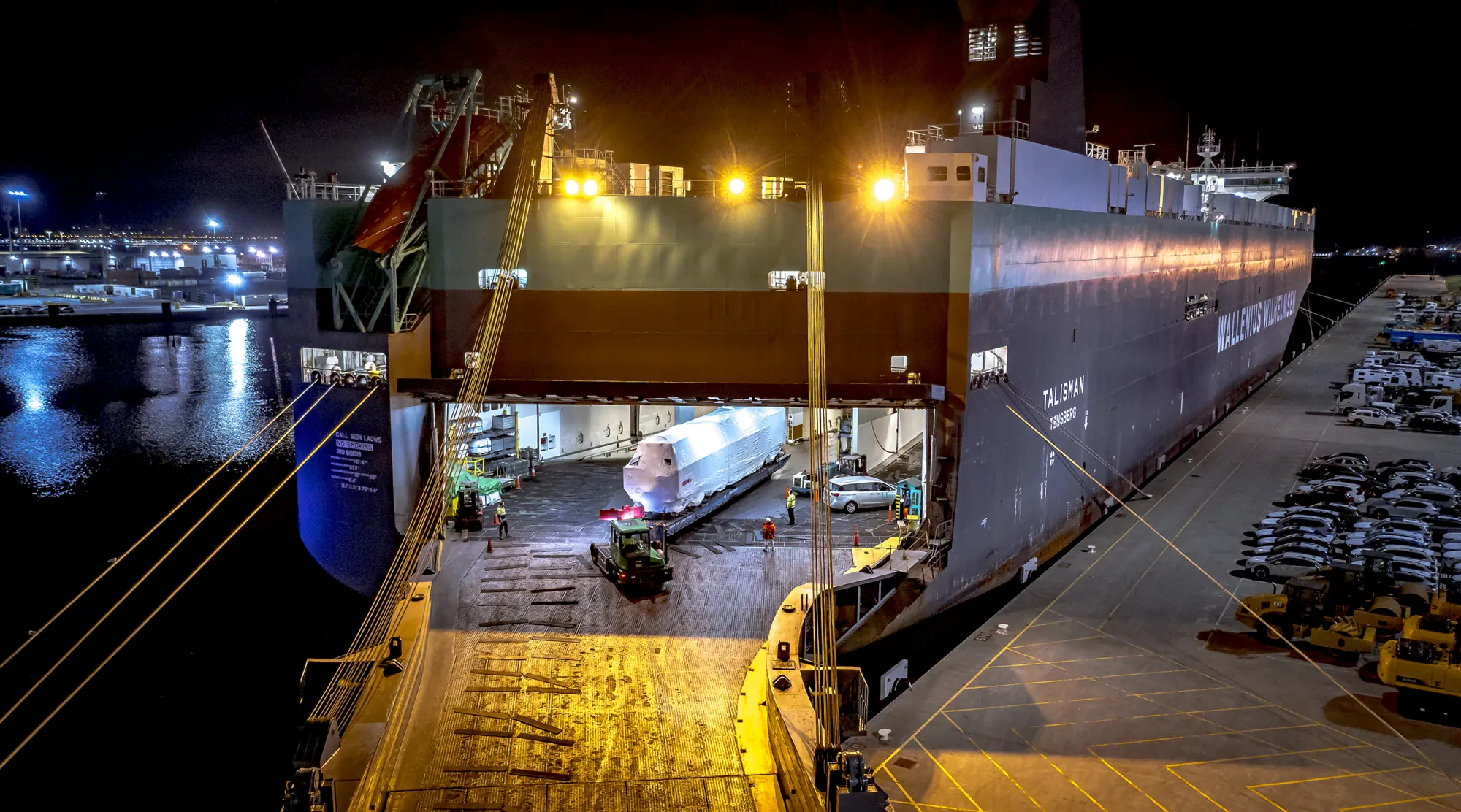
RoRo, short for roll-on/roll-off, uses vessels built with ramps so a vehicle can be driven or towed straight onto the ship instead of being loaded into a box. It is the right call for motorhomes, buses, oversized trucks, and heavy equipment that simply cannot be crated. For these vehicles it is often not a choice between methods at all. Container shipping is not physically possible, so RoRo is the only realistic ocean freight option.
- The vehicle generally needs to start and drive onto the ramp under its own power
- Loose items inside the vehicle, tools, boxes, spare parts, are usually not permitted
- The vehicle sits exposed on an open deck rather than sealed inside a container
- Not every European port runs RoRo services, so the destination can limit your options
The port question: why Jacksonville, not New York, makes sense from Miami
A lot of shipping guides quote routes out of New York, because that is where a large share of general container traffic runs. If you are based in Florida, trucking a vehicle over a thousand miles north to New York for a RoRo booking rarely makes sense. Jacksonville is one of the busiest RoRo ports in the country, and it runs regular vessel service to European destinations including Germany, Belgium, and the UK. For a Miami-based shipment, Jacksonville is the practical starting point, not New York.
We coordinate the inland leg from your pickup location to the port that actually fits your vehicle and route, whether that is Jacksonville for RoRo or one of the container terminals along the East Coast. That decision gets made based on your specific vehicle, not a default assumption about which port everyone uses.
For a review of your vehicle’s dimensions and pickup needs, use our vehicle-shipping service.
Getting the vehicle ready before it ships
- Remove or strap down anything that could shift during transit: racks, accessories, loose panels
- Keep the fuel tank low; most carriers want it at a quarter tank or under
- Photograph the vehicle from every angle before handover; this matters for any damage claim later
- Decide upfront whether the vehicle needs to be road-registered in Europe or is going for non-road use, like a job site or a competition
- Confirm the arrival port can actually handle your equipment's size and weight before you book
Will it actually be legal to drive once it lands?
Shipping a large US vehicle to Europe does not automatically mean you can register and drive it there. Width limits, emissions rules, and registration categories vary by country, and RVs in particular get classified differently across EU member states. If road use is the goal, the vehicle goes through the same EU compliance and homologation review as a standard car. If it is heading to a job site or an event instead, that registration step does not apply, but customs still assesses duty and VAT on the declared value.
Frequently asked questions
Do I have to truck my vehicle all the way to New York?
No. If you are shipping from Florida, Jacksonville is a major RoRo port with regular European service, sitting a few hundred miles from Miami rather than over a thousand. We arrange the inland transport to whichever port actually fits your vehicle and route.
Is RoRo cheaper than container shipping?
It depends, and the two are rarely a direct choice for the same vehicle. If your vehicle fits a container, RoRo is not typically a savings play once you factor in the reduced protection. If it genuinely needs RoRo because of its size, pricing is based on that vehicle's dimensions and route rather than a comparison to container rates.
Can I pack tools or spare parts inside an RV or truck going by RoRo?
Generally no. Standard RoRo carrier rules do not allow loose cargo inside the vehicle. Parts and tools need to travel separately, packaged and shipped on their own or in a container. This is one more reason container shipping is preferred whenever a vehicle's dimensions allow it.